
How Turf Covers Help Golf Courses Achieve Earlier Spring Green-Up
Discover how Evergreen turf covers warm soil, protect crowns, and accelerate spring green-up so superintendents can open greens weeks earlier.
Introduction
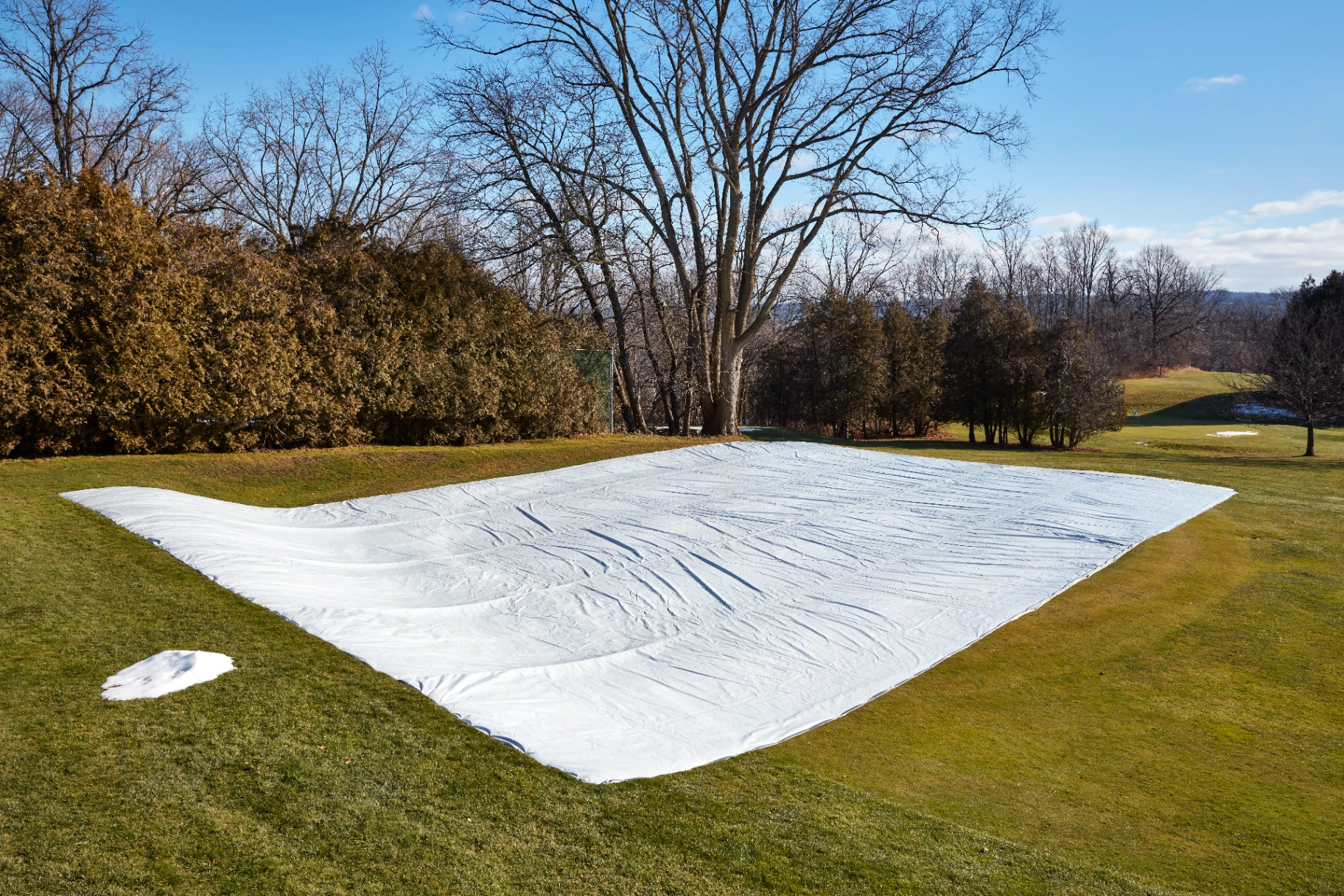
For golf course superintendents across the northern half of North America, few metrics matter more in early spring than the calendar. Every day gained on green-up is a day of playable, revenue-generating turf and one less day of member complaints about closed greens, temporary cups, and slow surfaces. Getting there faster is not luck. It is soil temperature, agronomy, and the disciplined use of the right protective covers through the shoulder seasons.
Evergreen Turf Covers have become a standard tool in that toolkit. Used correctly, a permeable, engineered cover creates a controlled microclimate over the green that raises soil temperatures, protects the crown, and encourages earlier root activity — often opening greens one to three weeks ahead of schedule.
Table of Contents
- What "green-up" actually means
- The greenhouse effect over a putting surface
- Soil temperature and root activity
- Winter stress and the case for permeable covers
- SmartEdge™ Technology and cover performance
- Building a spring green-up program
- FAQ
What "green-up" actually means
Green-up is the transition from winter dormancy to active shoot growth. On cool-season greens dominated by creeping bentgrass or Poa annua, that transition is driven by soil temperature at the crown, moisture availability, and light. Air temperature is a poor proxy — surface soil can be five to ten degrees colder than a sunny afternoon suggests, especially when nights still drop below freezing.
The result is a familiar pattern: turf looks like it should be waking up, but growth is delayed, colour is inconsistent, and any early traffic bruises the crown before recovery begins. Superintendents who accelerate soil warming, protect the plant during freeze-thaw cycles, and give the canopy a head start on photosynthesis consistently open earlier with better surfaces.
The greenhouse effect over a putting surface
A properly specified permeable turf cover functions as a low-profile greenhouse. Solar radiation passes through the woven fabric during the day and warms the turf canopy and upper soil profile. At night, the cover slows radiant heat loss back to the atmosphere. On sunny early-spring days, soil under an Evergreen cover can measure 10–12°F (roughly 5°C) warmer than an adjacent uncovered green, and independent field observations show the cover radiates up to 25% additional heat back into the turf.
That thermal advantage is compounded over a season. A few degrees of extra soil warmth for several hours a day accumulates into significant growing degree days, which is the currency of plant growth. Green-up follows growing degree days, not the calendar.
"The cover is not doing anything magical. It is protecting the small thermal gains we get from the sun and holding them in the top inch of the profile where the crown lives." — Turf researcher, cool-season trials
Soil temperature and root activity
Roots wake up before shoots. Creeping bentgrass initiates root growth at soil temperatures around 5°C (41°F), well before visible green tissue appears. If a superintendent can hold the soil in that root-growth window for even an extra week or two in March or April, the plant enters the season with a deeper, more resilient root system.
Deeper roots mean better drought tolerance in June, better traffic recovery in July, and more forgiving surfaces during summer stress. In other words, spring cover management is a summer performance decision, not just a green-up decision.
Evergreen covers support this because they allow air, water, and sunlight to pass through the fabric. Turf continues to respire and hydrate under the cover rather than suffocating in a sealed environment. That matters — an impermeable tarp may trap heat, but it also traps moisture and encourages disease, and it prevents natural gas exchange at the crown.
Winter stress and the case for permeable covers
Spring green-up is only as strong as the plant that survived winter. Evergreen covers reduce three of the most common winter injuries:
- Desiccation — cold, dry wind stripping moisture from exposed crowns.
- Crown hydration injury — the freeze-thaw cycle that ruptures cells when saturated crowns refreeze.
- Ice sheeting — anaerobic conditions under prolonged ice cover, especially damaging to Poa annua.
By moderating temperature swings and shielding the surface from wind, the cover reduces the number of hard resets the plant experiences. Turf that comes out of winter intact greens up faster than turf that has to first repair damage.
For courses in ice-prone regions, layering the Ice Shield product beneath a permeable cover adds a second line of defense against ice encasement while still allowing spring management flexibility.
SmartEdge™ Technology and cover performance
Not all covers perform equally, and edge failure is the most common reason covers underperform. Wind lift, torn grommets, and puckered seams reduce contact with the turf, create cold spots, and shorten cover life.
Evergreen's SmartEdge™ Technology is a reinforced perimeter designed to solve that problem. It distributes anchoring load evenly, resists wind stress, and keeps the fabric in consistent contact with the turf canopy. That translates to more uniform soil warming, fewer bare edges thawing at different rates, and covers that last through the full warranty period rather than degrading in year three or four.
For superintendents, the practical benefit is predictability: an installation that goes down cleanly, stays down through late-winter storms, and comes up again in one piece.
Building a spring green-up program
A green-up program built around covers has a few consistent elements:
- Pre-cover agronomy. Late-fall fertility, potassium loading, and a clean, dry canopy before covers go down.
- Timing. Cover as soon as the turf is dormant and conditions are stable. Uncover briefly during winter thaws only if agronomically justified.
- Monitoring. Soil temperature probes under and beside the cover give the data needed to time removal.
- Staged removal. Pull covers on a warming trend, not a single warm day. Refit if a hard frost is forecast.
- Immediate follow-up. Light rolling, a soluble nitrogen and iron application, and a mow at a slightly higher height to protect the tender canopy.
Courses that follow this rhythm consistently report earlier opening dates, faster ball roll development, and fewer member complaints during the shoulder season.
Related reading
- Choosing the Right Turf Cover for Your Golf Course
- Winter Turf Protection: Preventing Frost Damage on Golf Greens
- The Science Behind SmartEdge™ Technology
- Explore our full product lineup or contact the Evergreen team to discuss a program for your course.
Ready for an earlier opening day?
Talk to Evergreen about a cover program built around your climate, agronomy, and calendar. Request a quote or contact us to speak with a turf protection specialist.
Evergreen Turf Covers Team
Turf Protection Specialists
Nearly 40 years of turf protection experience helping golf courses, sports fields, sod farms, and horse tracks across North America.
More from Golf Courses

How Protective Turf Covers Extend Your Playing Season Into Late Autumn
Protective turf covers help turf managers extend the playing season into late autumn while protecting grass from cold conditions.

Evaluating the Cost-Benefit of Golf Course Winter Protection Systems
Golf course winter protection systems help prevent turf damage and costly repairs. Learn how turf managers evaluate their long-term value.
Choosing the Right Turf Cover for Your Golf Course
A practical comparison of Evergreen's Radiant, Premium, Original, Ice Shield, sports and horse track covers — with recommendations for every facility.
Talk to Evergreen
Ready to protect your turf this season?
Our team helps superintendents specify the right cover system — from championship greens to sod farms across the world.