
Top 5 Reasons to Invest in Evergreen Turf Blankets for Golf Greens
Superintendents who invest in turf blankets for golf greens see earlier spring openings, fewer winter losses, and lower long-term costs. Here's the case.

The cost of a quality turf cover is visible on a purchase order. Losing a green to winterkill, ice damage, or a late frost event carries a different kind of cost. It spreads across re-establishment labor, lost revenue, and difficult conversations with club management. For superintendents evaluating turf blankets for golf greens, that contrast is where the investment case starts.
Turf blankets for golf greens are not a luxury item. For facilities in cold climates, they are one of the most defensible investments in the maintenance budget. The case rests on earlier openings, documented cost savings, manageable installation, and protection against losses that compound quickly when they happen.
1. Earlier Spring Openings That Members Notice
Earlier spring openings are the benefit members see most directly. Most Evergreen users report opening two to three weeks ahead of facilities without covers. In practical terms, that means two to three additional weeks of rounds, revenue, and member satisfaction before the competition has opened its gates.
That timing advantage compounds. Turf that spent the winter under a breathable cover typically arrives in better condition at opening. Less recovery time. Less pressure on the crew during one of the busiest transitions of the season. Still, it is easy to underestimate how much that early-season condition advantage is worth until you have seen it play out over several seasons. A facility that opens two weeks earlier and in better shape than the year before is not a coincidence. It is the direct result of a protection decision made the previous autumn.
2. Turf Blankets for Golf Greens Protect Against the Losses That Cost the Most
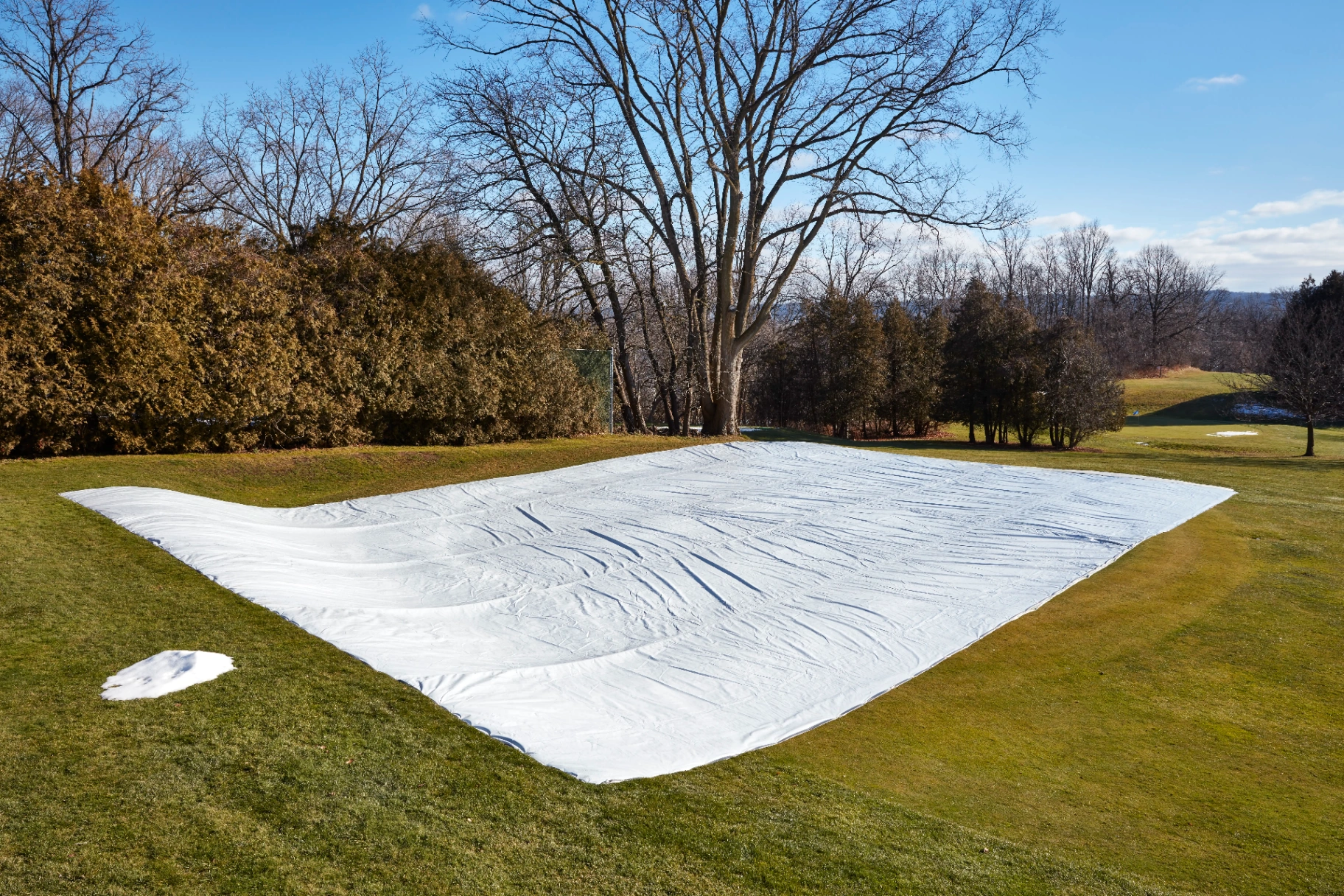
A single winterkill event on an exposed green can set a superintendent back months. Ice encasement, desiccation, and late-season frost damage are recurring risks in northern climates, not hypothetical ones. Evergreen turf blankets for golf greens increase soil and air temperature under the fabric by up to 10°F depending on location and time of year. That buffer is often the difference between a green that comes through winter in playable condition and one requiring aggressive renovation before the season starts. The Evergreen Ice Shield is engineered specifically to protect against ice, sleet, and snow accumulation. That is a different threat profile than general cold-weather stress, and it deserves a dedicated product.
3. Documented Cost Savings From Turf Blankets Hold Up to Scrutiny
Customers using Evergreen turf blankets for golf greens report average cost savings of $6,754 per season. Those savings come from reduced re-establishment costs, lower input use, and less remediation labor in the spring. For that reason, the financial case for covers strengthens further when you factor in what a single major winterkill event actually costs in materials, labor, and lost playing time. The Evergreen Radiant carries a 12-year warranty. The Evergreen Premium carries a 10-year warranty. The annual cost per green, spread over the product life, sits well below what most facilities spend managing the consequences of an unprotected winter.
4. Installation That Doesn't Overwhelm Your Crew
A 72' x 90' Evergreen cover installs with three people in under 20 minutes. That is a manageable ask during a busy fall closing schedule. In addition, storage requires far less space than most managers expect. Eighteen covers stack into approximately 10' x 10' x 6'. The material is UV-treated and will not rot, mold, or degrade between seasons.
Once a facility invests in a set of covers, the crew handles installation and removal more efficiently each season. As a result, the ongoing operational overhead is low compared to the protection these covers deliver year after year.
5. Turf Blankets for Golf Greens Mean a Shorter Window to Reach Playing Conditions
Germination under an Evergreen cover can begin within four to five days. Beyond germination speed, documented results show covers can accelerate establishment by up to four months in some applications. The GCSAA Foundation's active research into optimizing the growing environment for golf course turf reflects how closely the industry links establishment speed and winter survivability to protection decisions made months earlier. For courses running fall overseeding programs or managing greens after aeration, that compression of the establishment window is operationally valuable. The turf reaches playable density sooner, and consequently, the crew moves on to the next task instead of waiting.
Facilities like Erin Hills, Oakmont, and Winged Foot have built winter protection into their maintenance programs. Similarly, any facility serious about spring performance and cost control will find the investment case for turf blankets hard to argue against.
The full product line and ongoing guidance are available on the Evergreen blog. Ready to talk to a member of our team? Contact us here.
Evergreen Turf Covers Team
Turf Protection Specialists
Nearly 40 years of turf protection experience helping golf courses, sports fields, sod farms, and horse tracks across North America.
More from Golf Courses

How Protective Turf Covers Extend Your Playing Season Into Late Autumn
Protective turf covers help turf managers extend the playing season into late autumn while protecting grass from cold conditions.

Evaluating the Cost-Benefit of Golf Course Winter Protection Systems
Golf course winter protection systems help prevent turf damage and costly repairs. Learn how turf managers evaluate their long-term value.
How Turf Covers Help Golf Courses Achieve Earlier Spring Green-Up
Discover how Evergreen turf covers warm soil, protect crowns, and accelerate spring green-up so superintendents can open greens weeks earlier.
Talk to Evergreen
Ready to protect your turf this season?
Our team helps superintendents specify the right cover system — from championship greens to sod farms across the world.